New Construction Spray Foam Insulation
Improve Comfort and Reduce Energy Costs
(289) 270-6032
New Construction Insulation in
GRIMSBY, ONTARIO
The best time to add spray foam is while a home or building is still being framed. Every wall, ceiling, and floor cavity is wide open, so nothing blocks the spray. There is no drywall to cut and no finished room to protect. Getting full, even coverage at the right thickness is simple at this stage. Trying to add the same insulation later, after the walls are closed up, is much harder and costs more.
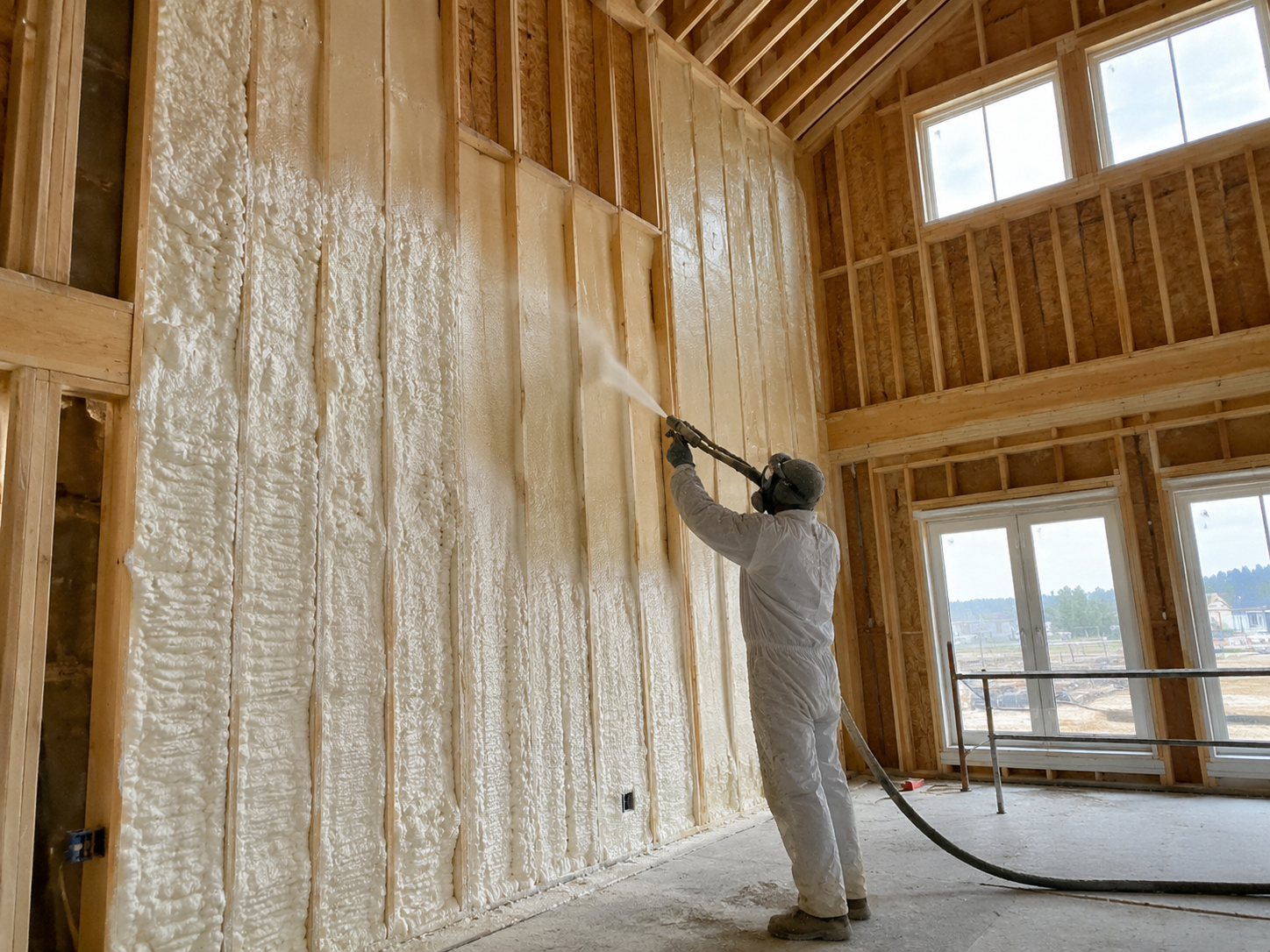
Why Build Spray Foam Into A New Home From The Start?
Grimsby and the wider Niagara Region keep growing, and new homes and businesses are going up across the area. When builders and owners pick spray foam at the framing stage, they lock in better comfort and lower energy bills for as long as the building stands. It is a choice that keeps paying off year after year.

Which Parts Of A New Build Get Spray Foam?
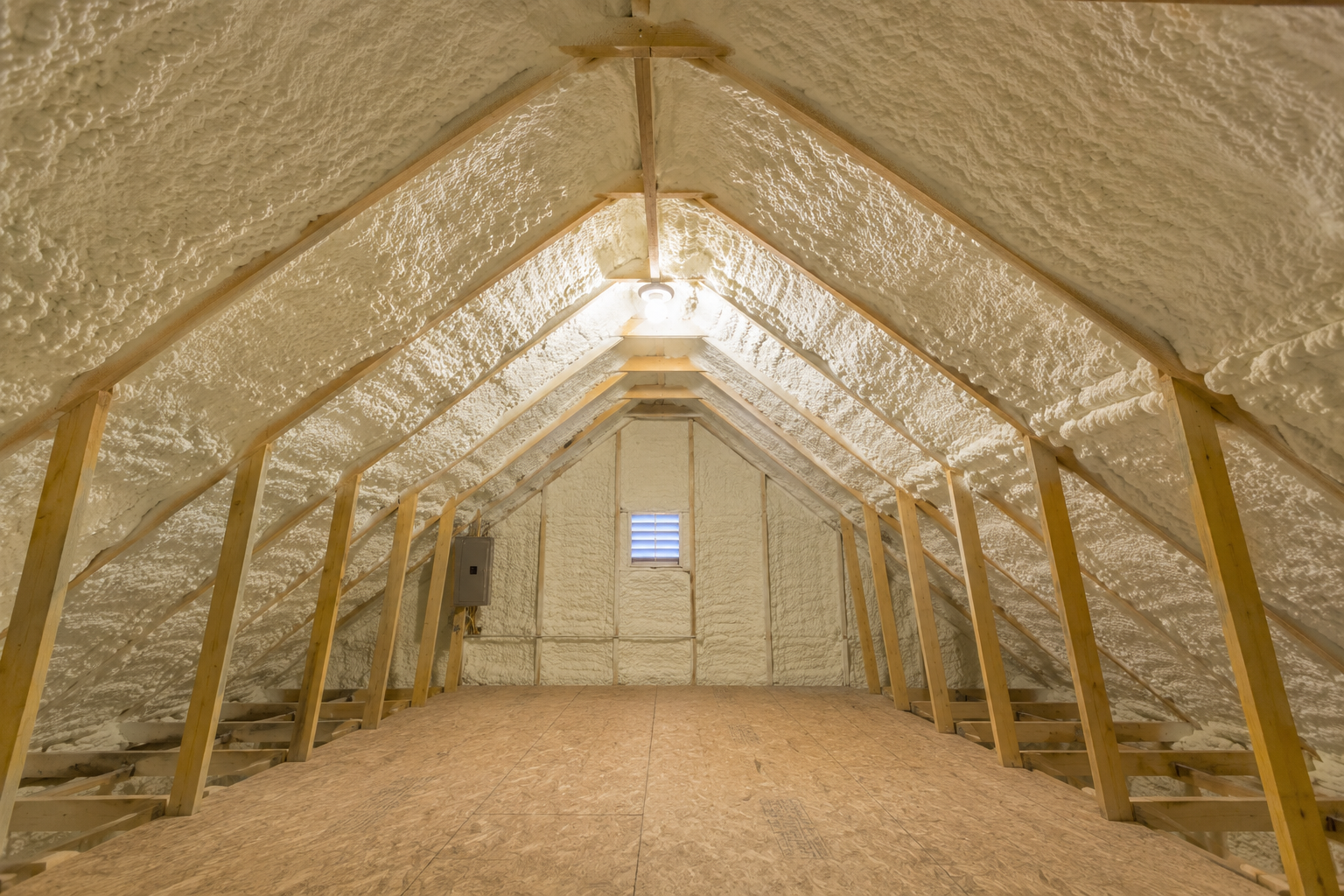
A full spray foam package on a new build gives you a tight, energy-saving shell right from the start.
During a new build, spray foam can go on nearly every surface that needs insulating. The areas we spray most often are:
- Exterior wall cavities — sprayed between studs as a full fill or paired with batts
- Attic roof deck — for sealed, unvented attic setups
- Basement foundation walls — done before any stud framing goes up
- Rim joists — sealed at each floor level
- Crawl space perimeter walls — for sealed, encapsulated crawl spaces
- Window and door rough openings — to stop air leaking through framing gaps
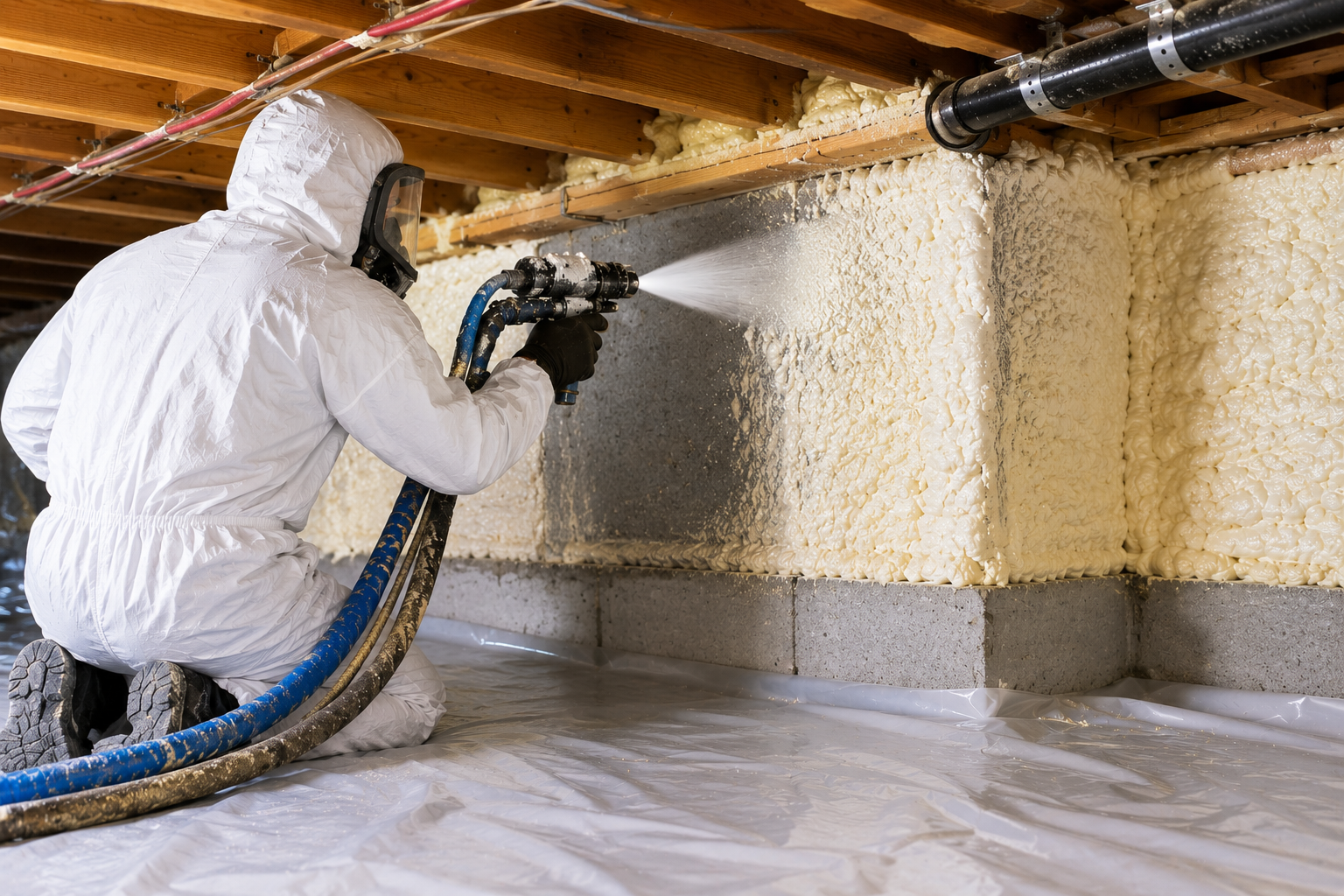
What Does Ontario's Energy Code Require For New Homes?
Ontario's Building Code and energy efficiency rules set the lowest insulation levels a new home can have, based on its climate zone. Grimsby sits in a zone that calls for strong wall R-values, well-insulated attics, and a steady air barrier that wraps the whole building shell.
Spray foam meets or exceeds these requirements in a single layer without the need for separate air barrier products. For builders looking to achieve EnerGuide or Net Zero Ready ratings, spray foam is a key component of the high-performance envelope required to hit those targets.
Can Spray Foam Be Combined With Other Insulation Types?
Yes — spray and batt systems are a popular and cost-effective approach in new construction. A layer of closed cell spray foam — typically one to two inches — is applied to the interior face of the exterior sheathing. This layer creates the air barrier and vapour control. Then fiberglass or mineral wool batts are installed to fill the remainder of the cavity and achieve the target R-value.
This pairing gives you the air sealing strength of spray foam at a lower price than packing the whole cavity with foam. It shows up often in both production homes and custom builds across Grimsby and the wider Niagara Region.
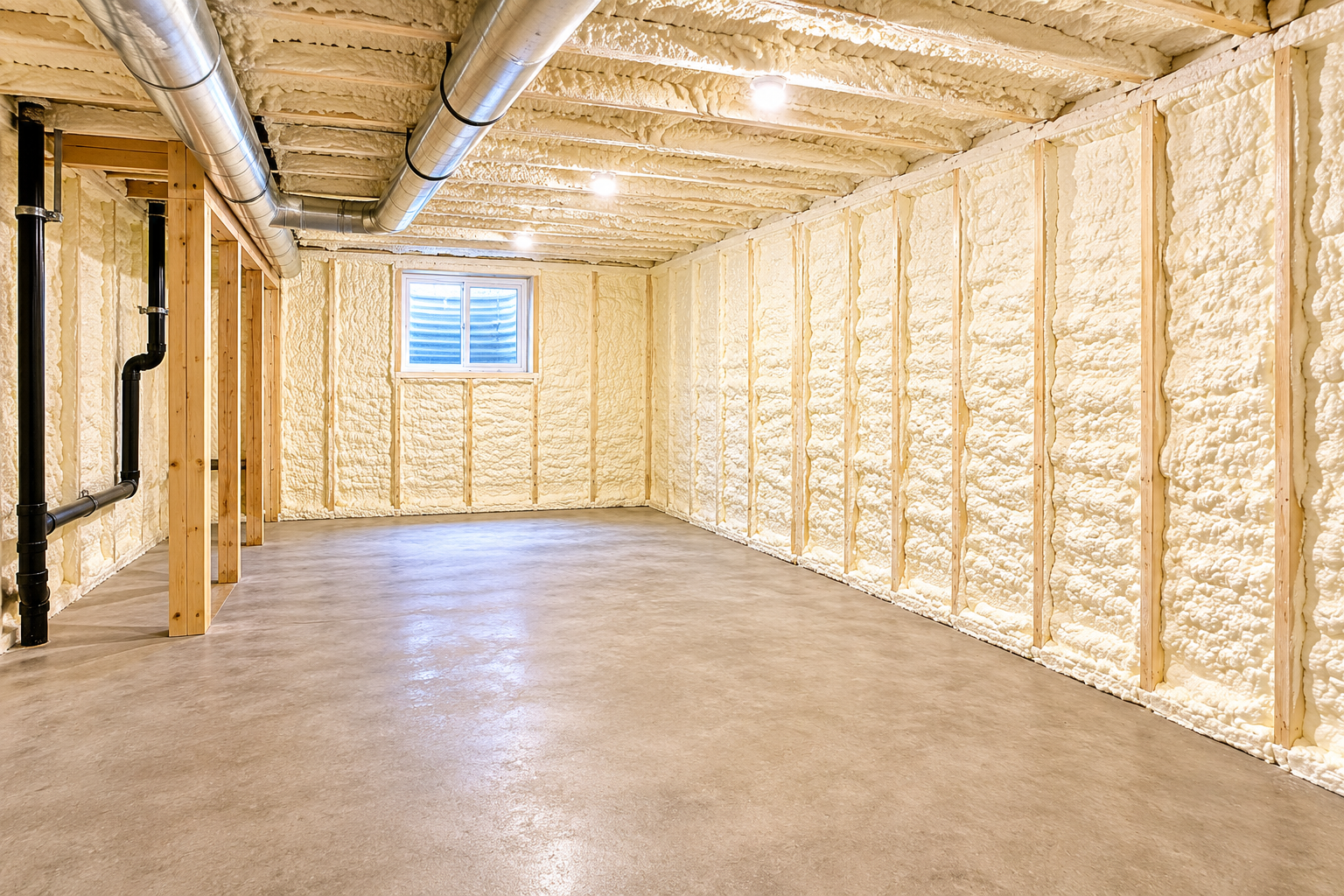
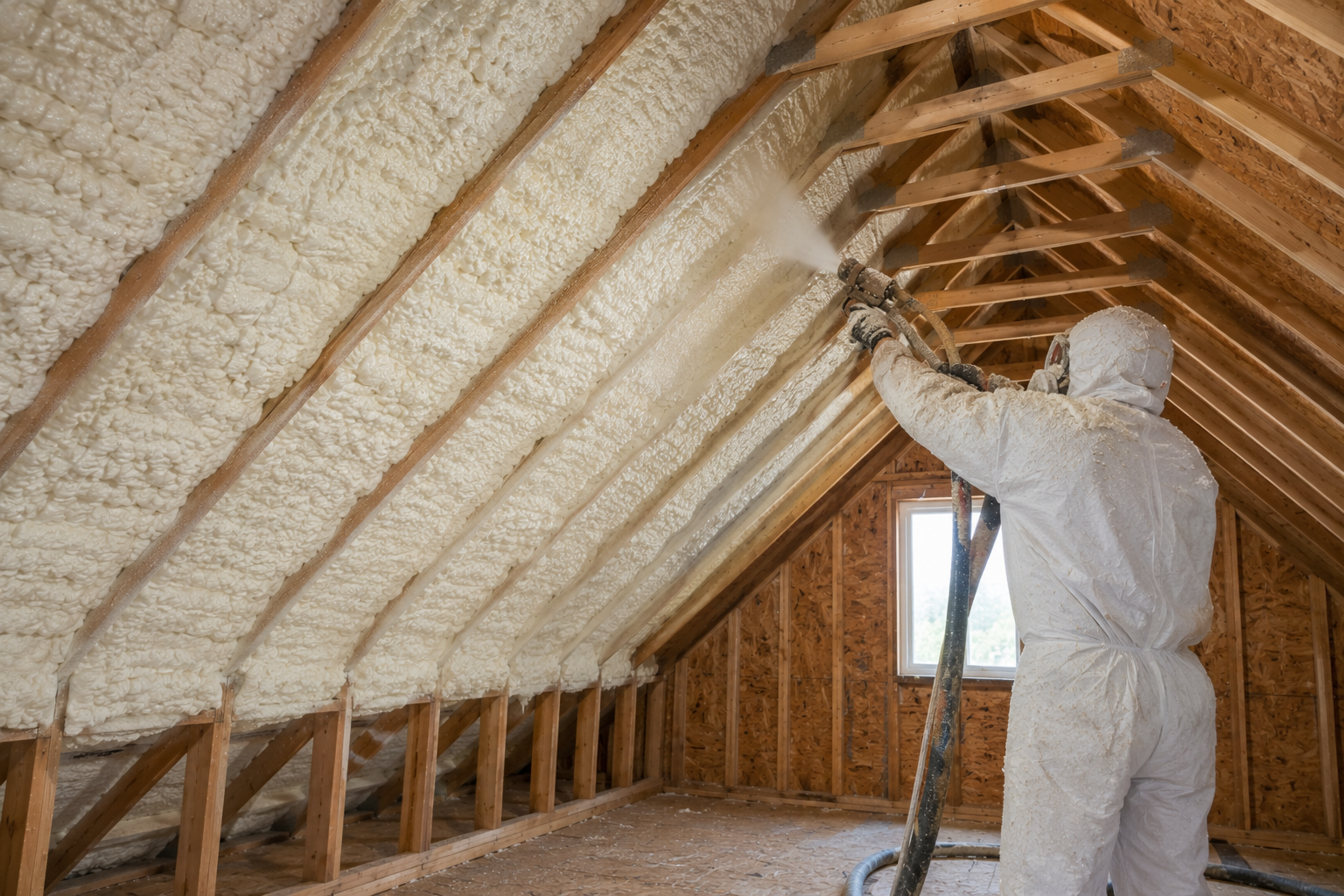
Does Spray Foam Help Indoor Air In A New Home?
New homes built with spray foam insulation tend to have better indoor air quality control than those built with batt insulation alone. Because spray foam eliminates most air infiltration, the home's ventilation is controlled through the mechanical system — typically an HRV (Heat Recovery Ventilator) — rather than random gaps in the building envelope.
That means the air coming into the home is filtered and conditioned instead of leaking in as random drafts. For Grimsby families dealing with allergens, humidity, or general air quality, a tight foam shell paired with a good HRV makes for a healthier indoor space.That means the air coming inside is filtered and conditioned instead of sneaking in as cold or damp drafts. For Grimsby families who worry about allergens, humidity, or stale air, a tight foam shell paired with a good HRV makes the home healthier to live in.
When During The Build Should Spray Foam Go In?
The foam goes on once the rough mechanical work is done — plumbing, wiring, and HVAC rough-in — and before the drywall goes up. At that point every gap and opening can be sealed at the same time as the wall and ceiling cavities.
Timing with the framing crew and the other trades matters. We team up with Grimsby builders to slot the insulation into the right spot in the schedule, so the job stays on track and every cavity is covered before inspection.
How Does Spray Foam Help A Builder's Reputation?
Builders who choose spray foam tend to get fewer warranty calls about comfort, moisture, and energy use. A home sealed with spray foam stays quieter, holds a steadier temperature, and is easier to heat and cool. Buyers feel that difference the moment they walk in.
In a busy new home market like Grimsby, comfort and low energy bills help a house sell. Spray foam is a real upgrade that adds lasting value and cuts down on call-backs after move-in, which is good for the builder and the buyer alike.
A new build is the best chance to design energy savings into a home from the ground up. We help builders, contractors, and homeowners across Grimsby and the Niagara Region with new construction insulation jobs of every size. Reach out to Grimsby Spray Foam Insulation to go over your build schedule and get a free estimate.