Closed and Open Cell Spray Foam Insulation
Pick The Right Foam For Every Part Of Your Home
(289) 270-6032
Closed and Open Cell Foam
GRIMSBY, ONTARIO
Spray foam comes in two main types: open cell and closed cell. Both start as polyurethane, but they act differently, perform differently, and fit different jobs. Knowing how they compare helps you pick the right one for your project here in Grimsby.
What Are The Two Kinds Of Spray Foam?
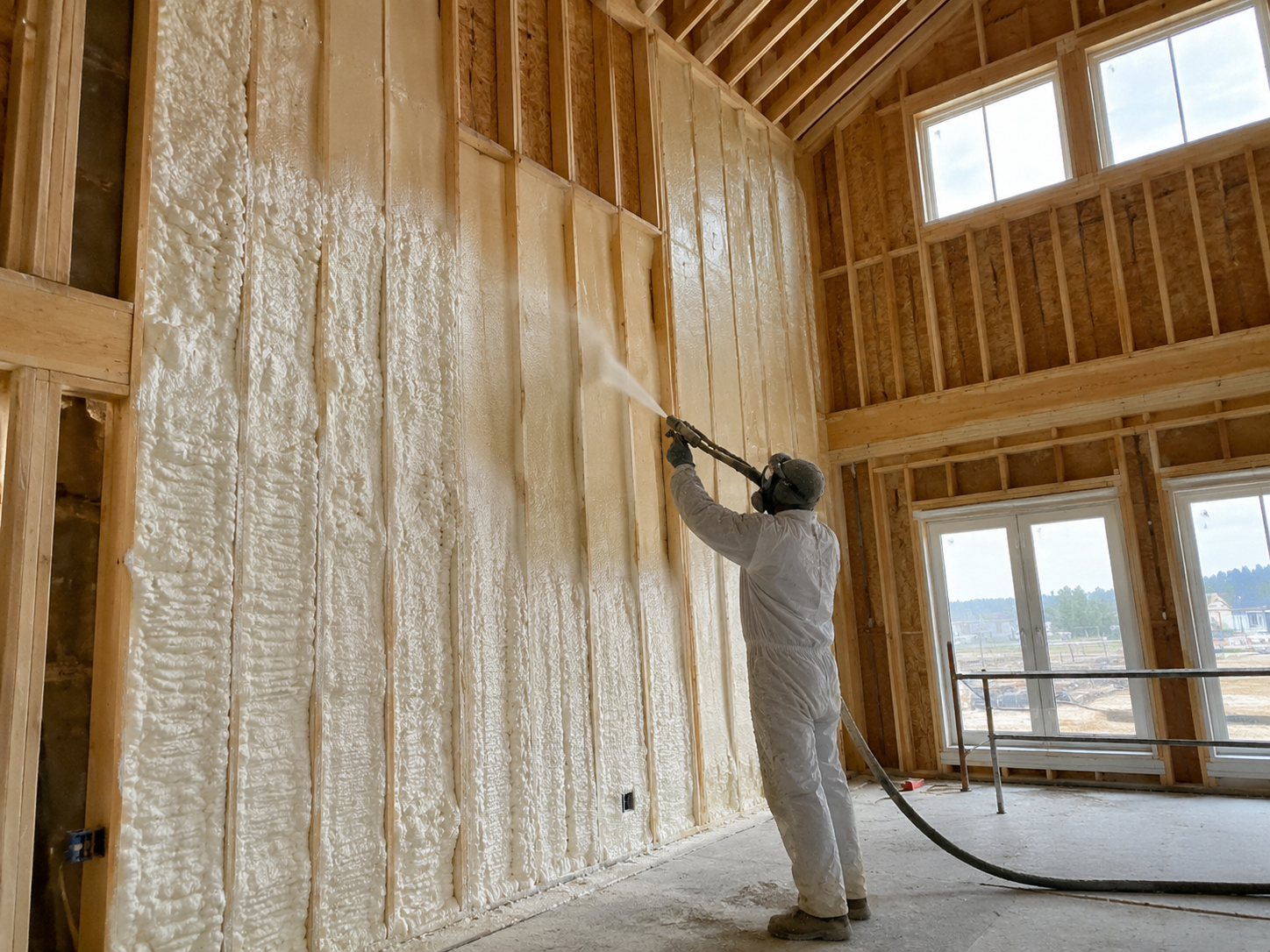
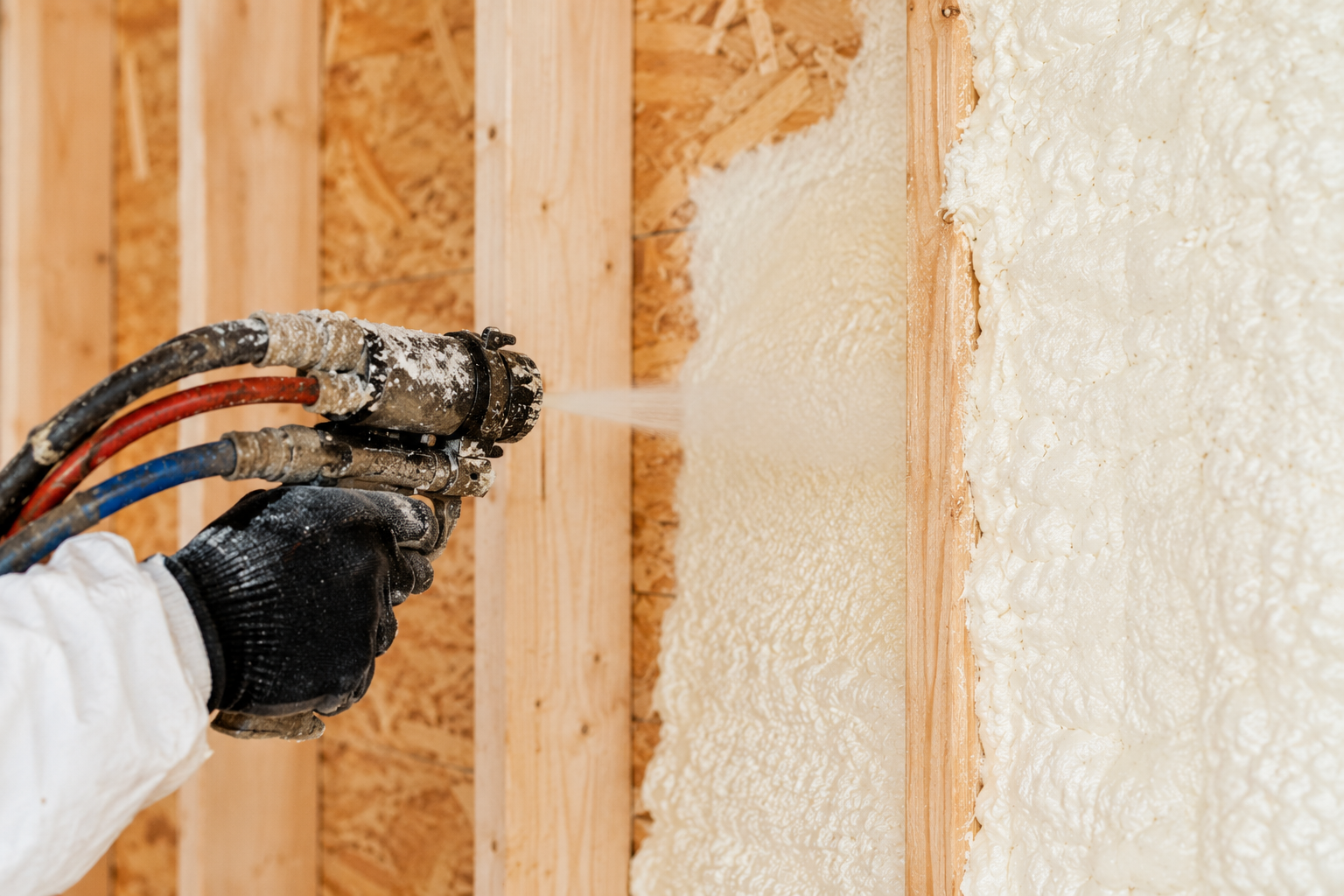
The big difference is the cell structure. In open cell foam, the little cells stay open once the foam expands and sets, so it ends up soft and spongy. In closed cell foam, those cells are sealed tight with gas trapped inside, which makes it much denser and more rigid.

Where Does Open Cell Foam Work Best?
Open cell foam is lighter, softer, and cheaper per square foot than closed cell. It puffs up a lot once it is sprayed, so a little material fills a large cavity. It seals air leaks well and gives solid warmth for the money.
Open cell foam is a good fit for places like:
- Interior wall cavities in above-grade construction
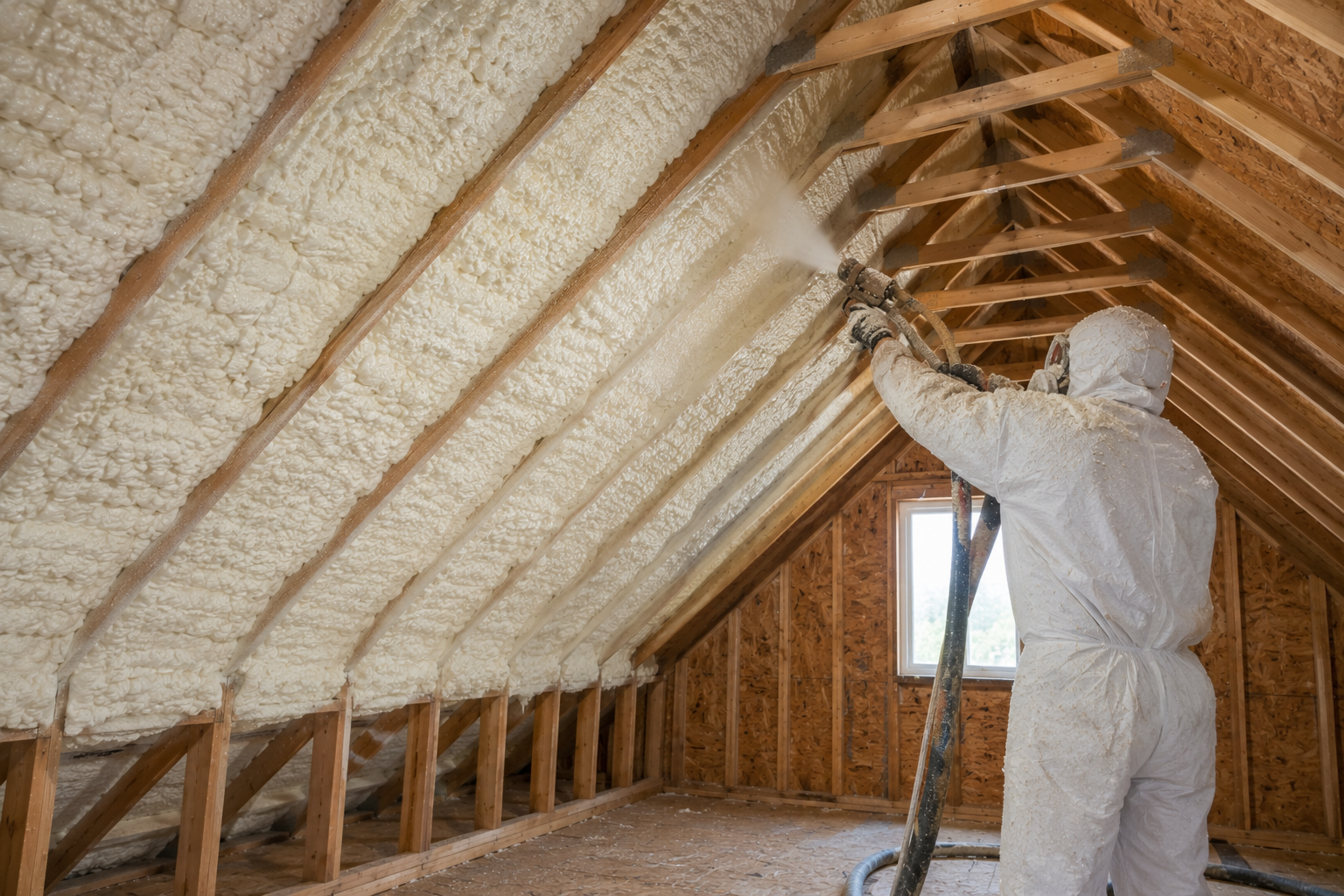
- Attic floor and roof deck applications in vented attic designs
- Sound control between rooms and floors
- Basement ceilings (above-grade surface)
- Garage ceilings where moisture is not a concern
It gives about R-3.5 to R-4 per inch. That is less than closed cell, but it is plenty for many above-grade spots when sprayed thick enough.
Where Does Closed Cell Foam Work Best?
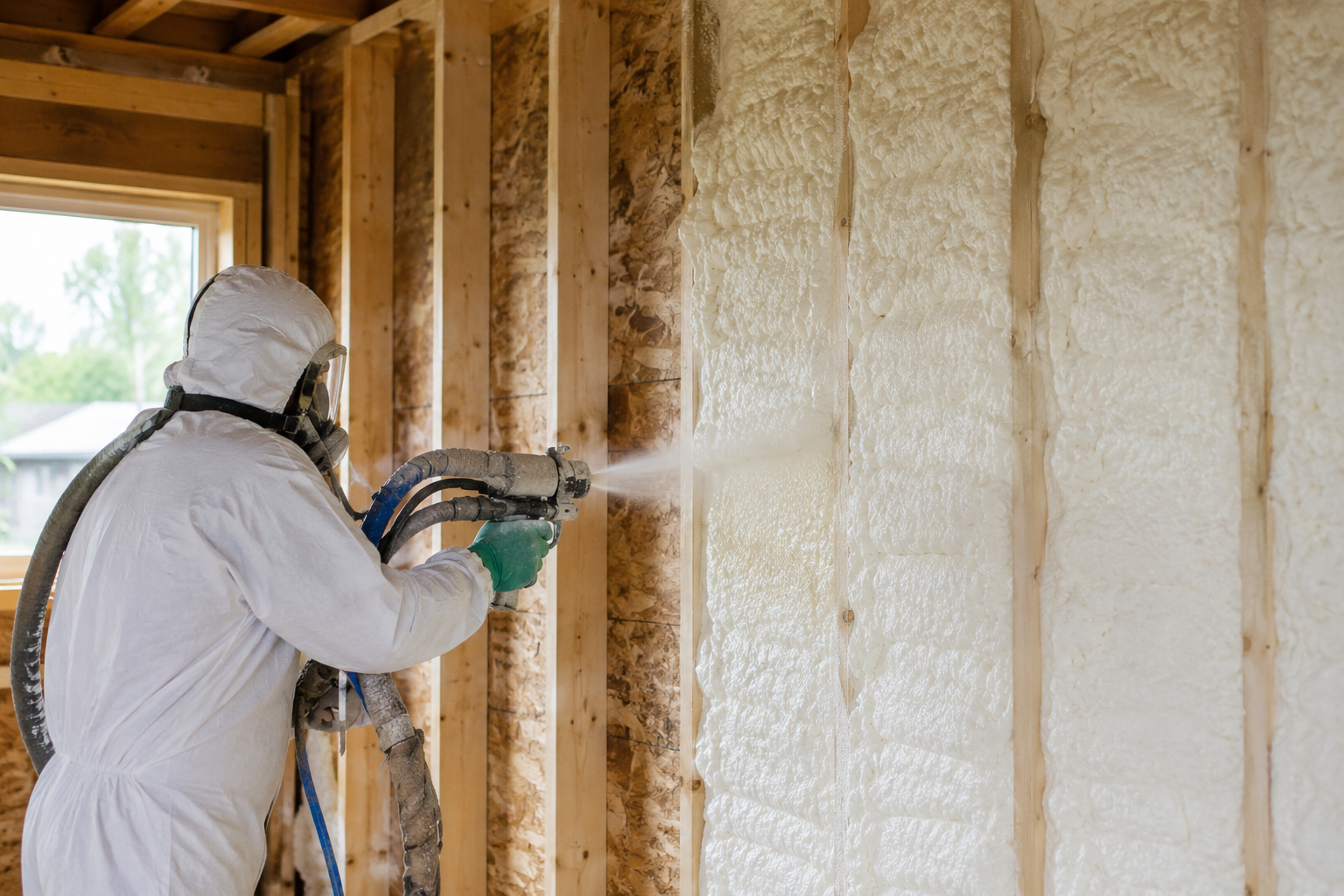
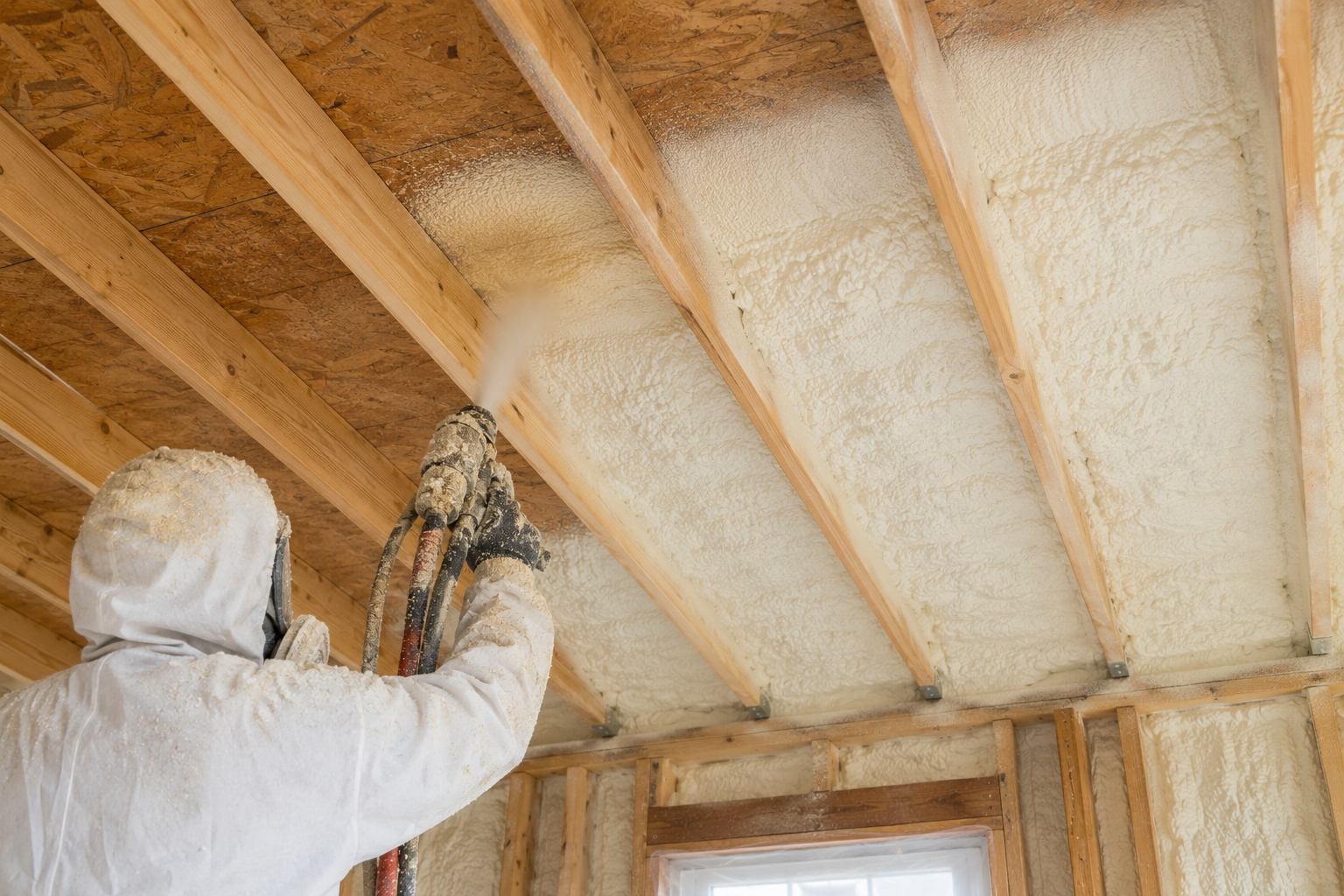
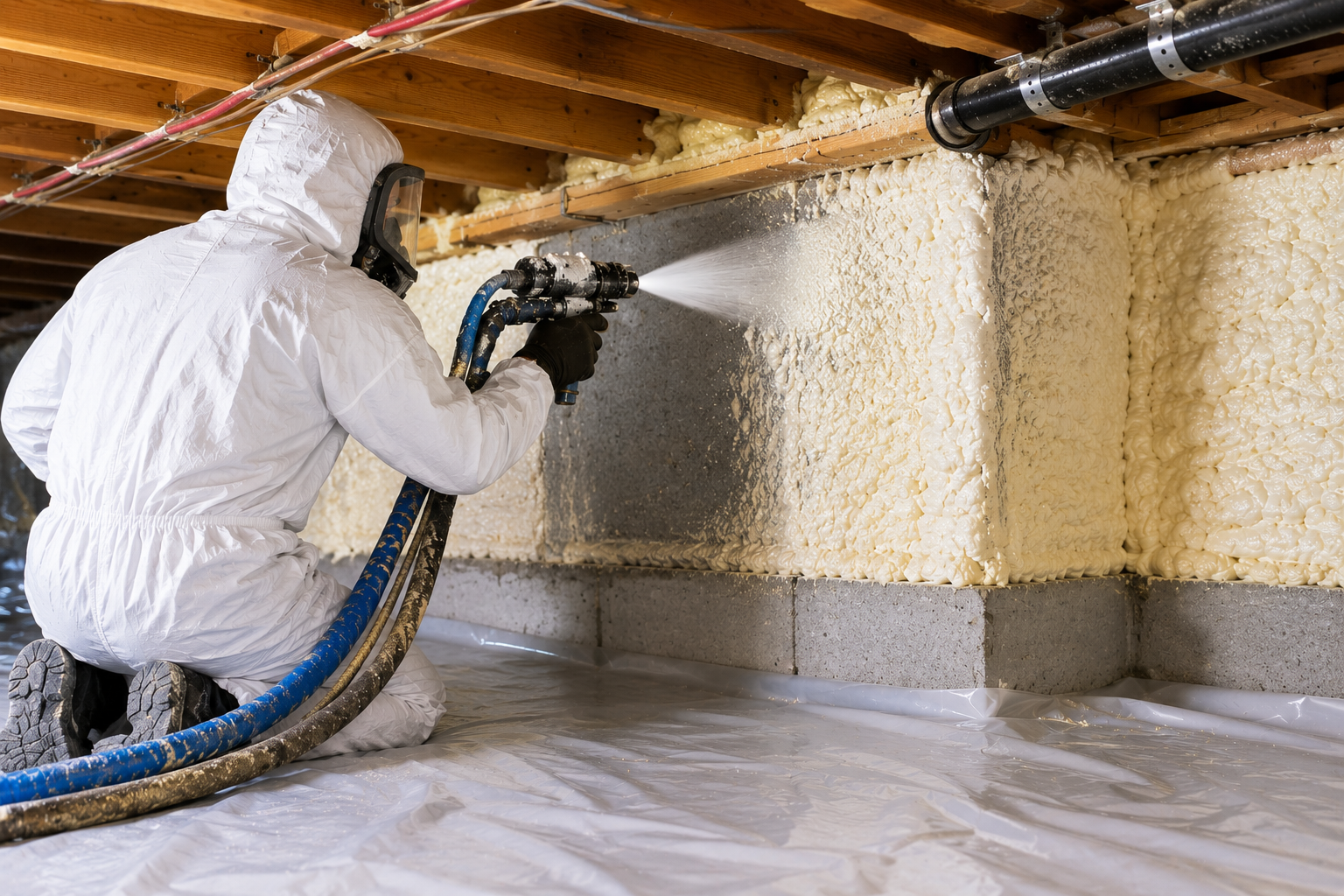
Closed cell foam is denser, harder, and gives more R-value per inch. Its sealed cells block moisture vapour, which lets it act as a Class II vapour retarder under Ontario building rules. Sprayed at the right thickness, it even adds strength to the wall framing.
Closed cell foam works best in spots like these:
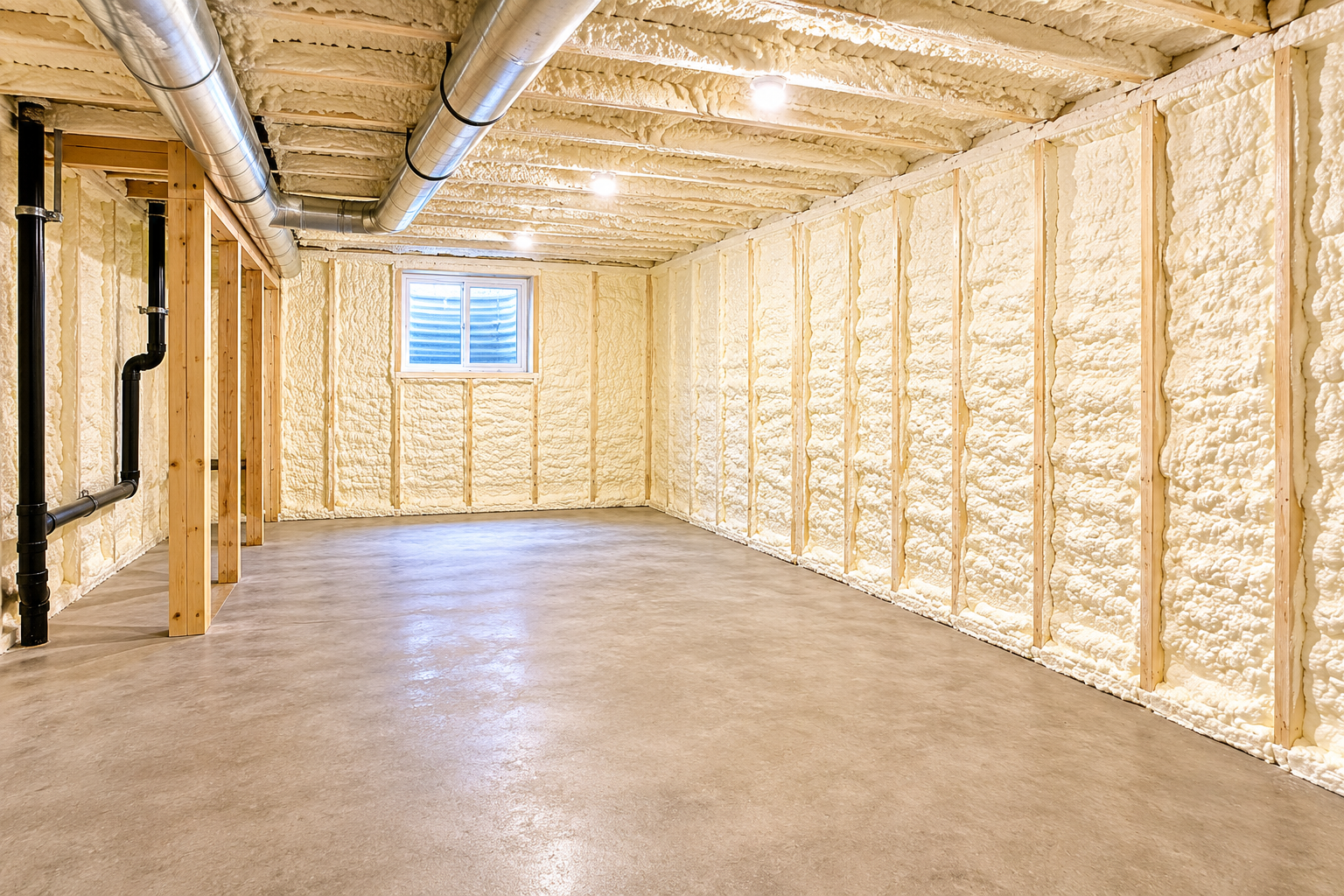
- Below-grade foundation walls and basement perimeter walls
- Crawl space walls and floors
- Rim joists at every floor level
- Exterior-facing garage walls
- Metal buildings and unheated structures
- Applications requiring the highest R-value in a limited thickness
Closed cell foam gives roughly R-6 to R-7 per inch, well above what open cell offers.
Which Type Is Right For Your Project?
Which foam you want mostly comes down to where it goes and how much moisture is around. Here is an easy way to look at it:
If the spot is below grade, sits against ground moisture, or needs a vapour retarder — go with closed cell.
If the spot is above grade, moisture is not a worry, and you mainly want good air sealing and insulation for a fair price — open cell is a solid pick.
Plenty of Grimsby homes use both kinds in different spots. Basement walls get closed cell, while the attic and inside walls get open cell. That mix puts the stronger foam where it matters and saves you from paying closed cell prices on every surface.
Can Spray Foam Go Over Existing Insulation?
Is It Safe Once The Foam Is In?
How Do Open Cell And Closed Cell Costs Compare?
Closed cell foam costs more per square foot than open cell, mainly because it uses more material per inch and the base chemicals are pricier. But since closed cell hits a higher R-value per inch, you can sometimes spray it thinner to reach the same R-value.
In Grimsby, the cost question usually answers itself based on the job. Where closed cell is needed to handle moisture, it is the right call no matter the price. Where open cell does the job fine, it is the cheaper way to go.
Picking the right foam for each part of your home really does change how well it performs and what it costs. We walk Grimsby homeowners and builders through the choices and suggest the best product for each spot. Contact Grimsby Spray Foam Insulation for a free consultation and estimate.